

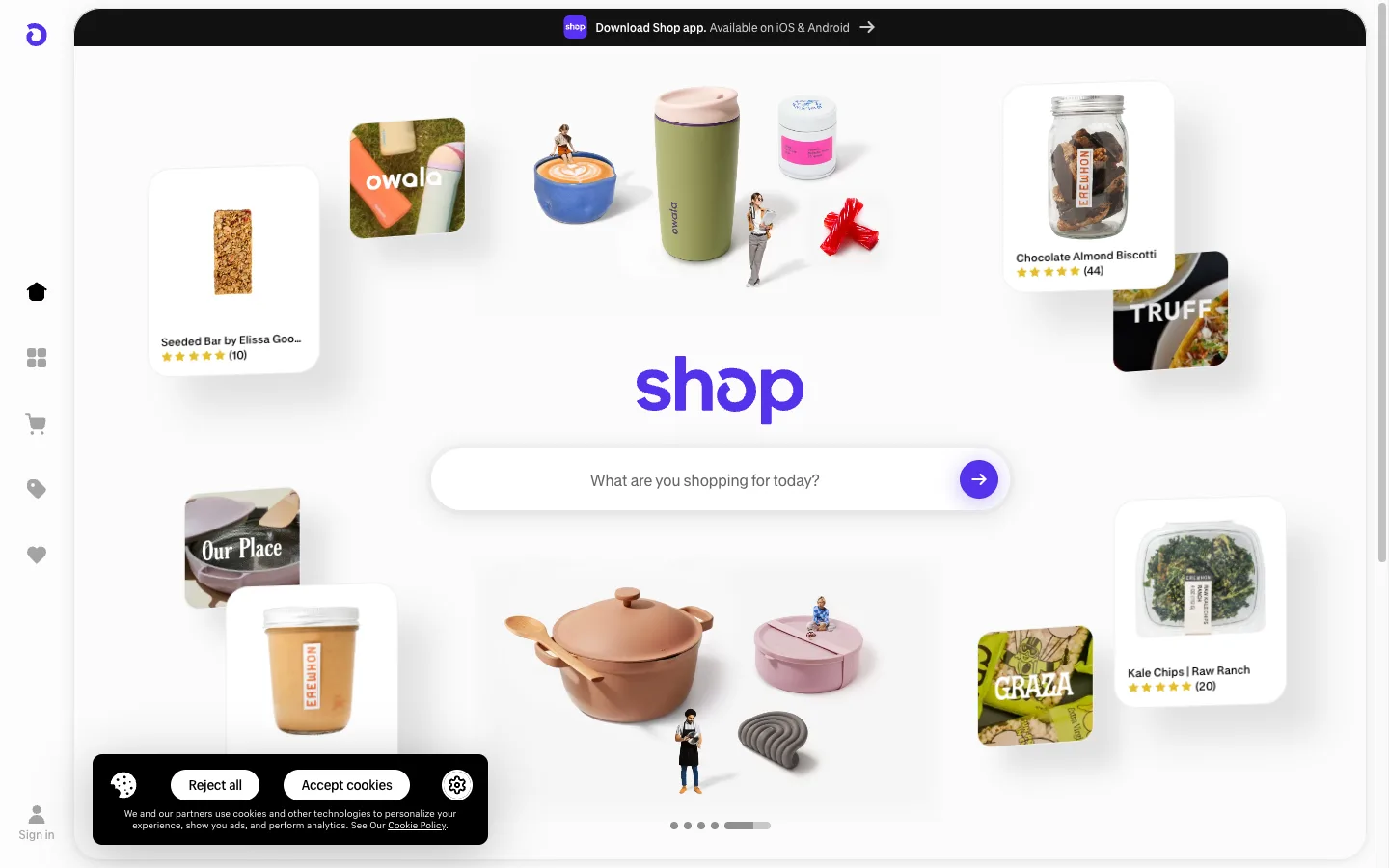
Shopify Agentic Storefronts run on a 3-layer mechanic: a catalogue exposed through the Universal Commerce Protocol (UCP), an AI shopping agent that queries it and ranks 3-5 products, and Shop Pay that closes the transaction inside the chat interface. This post explains how each layer actually works: what data crosses each boundary, where the surprises sit, and how the 3 layers differ from a traditional Shopify storefront. For the operational setup, see the Shopify Agentic Storefronts complete setup guide.
TL;DR: The 3-layer mechanic is (1) UCP catalogue exposure (Shopify auto-provisions the endpoint, agent reads Product/Offer/Review schema in near real-time), (2) agent query and ranking (ChatGPT, Copilot, Perplexity, Gemini parse buyer intent, retrieve from UCP, shortlist 3-5 with structured data), (3) Shop Pay checkout (mandatory; transaction completes inside the agent’s chat in under 30 seconds for returning users). Customer never visits the store.
What are Shopify Agentic Storefronts?
A Shopify Agentic Storefront is a native sales channel that exposes a merchant’s product catalogue to AI shopping agents through the Universal Commerce Protocol (UCP). When an AI agent receives a buyer query, the agent queries UCP for matching products, retrieves full product schema and inventory data in near real-time, surfaces 3-5 recommendations to the buyer with price and reviews, and routes the chosen purchase to Shop Pay for completion.
The agentic flow has two surface differences from traditional ecommerce:
- Discovery happens inside the AI chat, not on the merchant’s storefront. The customer never visits the homepage, collection page, or product page.
- Checkout completes inside the AI surface via Shop Pay, with the customer staying in the chat interface throughout the purchase.
The shared infrastructure is identical to traditional commerce: the same product catalogue, the same inventory, the same Shop Pay payment layer, the same Shopify admin order processing. The agentic channel sits on top of the existing store as an additional surface, not as a replacement.
For the 7-step enable procedure plus the broader operational guide, see Shopify Agentic Storefronts complete setup guide.
How do Shopify Agentic Storefronts work?
The mechanic in three layers:
Layer 1: catalogue data. Shopify provisions a Universal Commerce Protocol (UCP) endpoint automatically for every store that enables the Agentic Storefronts channel. The endpoint exposes product titles, descriptions, prices, inventory, variants, GTINs, brands, and Review schema to authorised AI agent clients.
Layer 2: agent query and response. An AI agent (ChatGPT, Microsoft Copilot, Perplexity, Google Gemini) receives a buyer query, queries the UCP layer with the parsed intent, retrieves matching products from connected stores, and presents 3-5 recommendations to the buyer with structured data. The agent’s recommendations are derived from product schema, not from marketing copy.
Layer 3: Shop Pay checkout. When the buyer accepts a recommendation, the agent routes the purchase through Shop Pay. Returning Shop Pay users complete the transaction in under 30 seconds without re-entering address, card, or shipping. The order lands in the merchant’s Shopify admin labelled with the Agentic Storefronts channel.
For deeper coverage of exactly which product fields AI agents scrape and how often, see my Shopify Agentic Storefronts product data scraping reference covering the nine fields agents read and the three they skip.
How are Agentic Storefronts different from traditional Shopify storefronts?
The two channels share infrastructure but differ on discovery, surface, and checkout flow.
| Dimension | Traditional Shopify Storefront | Shopify Agentic Storefront |
|---|---|---|
| Discovery channel | SEO, paid ads, social, direct, email | AI agent recommendation inside chat |
| Customer surface | Merchant’s website (homepage, PDP, cart) | AI chat interface (ChatGPT, Copilot, Perplexity, Gemini) |
| Browsing | Customer scrolls, filters, compares | Agent shortlists 3-5 products from query |
| Checkout layer | Shopify checkout (Shop Pay optional) | Shop Pay only (mandatory) |
| Page views per order | 8-15 typical | 0 (customer never visits the store) |
| Channel cost | Plan + transaction fees | Plan + transaction fees (no additional charge) |
| Required schema | Recommended, not enforced | Product, Offer, Review, BreadcrumbList mandatory |
| Inventory sync | Real-time | Real-time (~60 second propagation) |
The dimension that catches most merchants off-guard is page views per order. An agentic order produces zero page views on your store. Standard analytics dashboards built around traffic and bounce rate become uninformative for the agentic share of revenue. The Shopify admin channel-attribution view is the right dashboard for this channel.
When did Shopify launch Agentic Storefronts?
Three published dates that matter:
- March 24, 2026: Auto-enrolment triggered for US merchants. Stores that did not actively opt out were enrolled by default.
- April 22, 2026: Migration from the legacy Storefront Catalog MCP server to the Universal Commerce Protocol (UCP). The legacy MCP tool names were marked deprecated.
- May 30, 2026: Hard cutover for the legacy MCP endpoint. Stores still on the old endpoint after this date lose visibility to UCP-compatible AI agents.
For full coverage of what changed in the April 22 update including Universal Cart and the May 30 deadline, see my Shopify Agentic Storefronts April 2026 update post.
Which AI agents support Shopify Agentic Storefronts?
Four AI shopping agents have native Shopify agentic checkout as of May 2026:
- ChatGPT via OpenAI’s Agentic Commerce Protocol (ACP), launched in conjunction with Shopify’s Winter 2026 Edition.
- Microsoft Copilot via Copilot Checkout, rolled out from March 2026.
- Perplexity via Instant Buy, expanded from a US pilot to global UCP integration in April 2026.
- Google Gemini and AI Mode via UCP.
All four route purchases through Shop Pay. All four read the same UCP endpoint. The agent-side differences (recommendation algorithm, ranking weights, conversational UI) are agent-specific; the merchant-side infrastructure is shared.
Do Shopify Agentic Storefronts work in the UK and Europe?
Yes. The channel ships globally on all paid Shopify plans. International rollout, including UK and EU, continued through 2026 after US auto-enrolment on March 24, 2026. UK and EU merchants get the same channel features as US merchants, with two differences:
- Currency defaults to the merchant’s primary Shopify Markets currency (GBP for UK-primary stores, EUR for EU-primary stores).
- Tax handling follows the merchant’s Markets configuration. UK merchants with “Include tax in prices” enabled emit VAT-inclusive prices in the UCP feed.
For UK-specific catalogue optimisation including EAN-13 GTINs, Royal Mail shipping options, and the United-Kingdom-as-primary-market fix, see my Shopify Agentic Storefronts catalogue optimisation for UK stores reference.
What schema markup do Agentic Storefronts require?
The Universal Commerce Protocol requires four schema types on every product detail page that an agent should index:
- Product with
name,image(multiple),description,sku,brand,gtin - Offer with
price,priceCurrency,availability,url - AggregateRating with
ratingValueandreviewCount - BreadcrumbList for category hierarchy
At least one individual Review node should accompany the AggregateRating. Online Store 2.0 themes (Dawn, Refresh, Impulse, Focal, Sense) output Product, Offer, BreadcrumbList, and Organization schema automatically on PDPs. Review and AggregateRating depend on the installed review app; Yotpo, Loox, and Judge.me all emit schema but the merchant should verify it actually fires in page source.
For Liquid patterns to ship valid BlogPosting schema alongside Product schema, see my Shopify article schema in Liquid post.
Do Agentic Storefronts replace SEO?
No. Agentic commerce is an additional channel, not a replacement for organic search. The two channels share a foundation (product data quality, structured schema, brand authority) but diverge on surface.
The merchants doing best in 2026 treat the two as complementary:
- SEO captures shoppers who start at Google with a comparative or informational query.
- Agentic captures shoppers who start at ChatGPT or Copilot with a need-based conversational query.
The same investment in product schema, GTIN coverage, review quality, and content depth pays back across both channels. For the broader Shopify CRO and audit framework, see my Shopify technical audit checklist covering the 25-point sweep that catches gaps on both SEO and agentic readiness.
The takeaway
- The 3-layer mechanic: UCP catalogue exposure, AI agent query and ranking, Shop Pay checkout. Each layer hands off cleanly to the next.
- UCP exposes Product, Offer, AggregateRating, BreadcrumbList in near real-time (~60 second admin-to-UCP propagation). Schema gaps mean the agent has nothing to read.
- 4 agents query the same UCP endpoint: ChatGPT, Microsoft Copilot, Perplexity, Google Gemini. The merchant-side infrastructure is shared.
- Shop Pay is mandatory at the checkout layer. No Shop Pay, no agentic transaction.
- 0 page views per order is the dimension most merchants miss. Standard traffic-based dashboards become uninformative for the agentic share of revenue; use the Shopify admin channel-attribution view.
Ready to enable the channel and ship? Read Shopify Agentic Storefronts complete setup guide for the 7-step procedure plus the catalog audit that prevents 80% of post-enable issues.